
Fact-Checked
Source Material Verified
Chimney Sweeping Nutley NJ: Common Mistakes Homeowners Make
Homeowners sometimes have an incomplete picture of what chimney maintenance involves. Looking into the firebox can reveal obvious problems, but it cannot provide a complete evaluation of the chimney system. Professional chimney maintenance can involve inspection, cleaning, and evaluation of components that are not visible from inside the fireplace. Understanding the difference can help homeowners in Nutley, South Orange, and nearby Essex County communities make better decisions about chimney care.
“I Can See Into the Firebox, So I’d Know If Something Was Wrong”
Looking into the firebox can be useful, but it is not a complete chimney inspection. Important parts of the system may not be visible from that location, including portions of the flue, chimney exterior, crown, and other accessible components.
Creosote and other deposits can accumulate inside the chimney. CSIA recommends annual inspection and says masonry fireplaces should be swept when soot buildup reaches about 1/8 inch, or sooner when glaze is present. The organization also notes that cleaning frequency depends on factors such as use, installation, fuel, and burning habits.
Homeowners should also avoid treating “three stages” or “three degrees” of creosote as an NFPA classification. Deposits can vary from ordinary soot and creosote to hard, tacky, or glazed material. Hard deposits may require specialized mechanical cleaning, and certain chemical products may sometimes be used as part of professional treatment.
A Level 1 inspection is designed for situations where the chimney and venting system are readily accessible and its current use is continuing. A Level 2 inspection has a broader scope and includes an interior video examination when required.
“Sweeping Is Just Brushing Out Ash”
Removing fireplace ash between fires is different from cleaning a chimney.
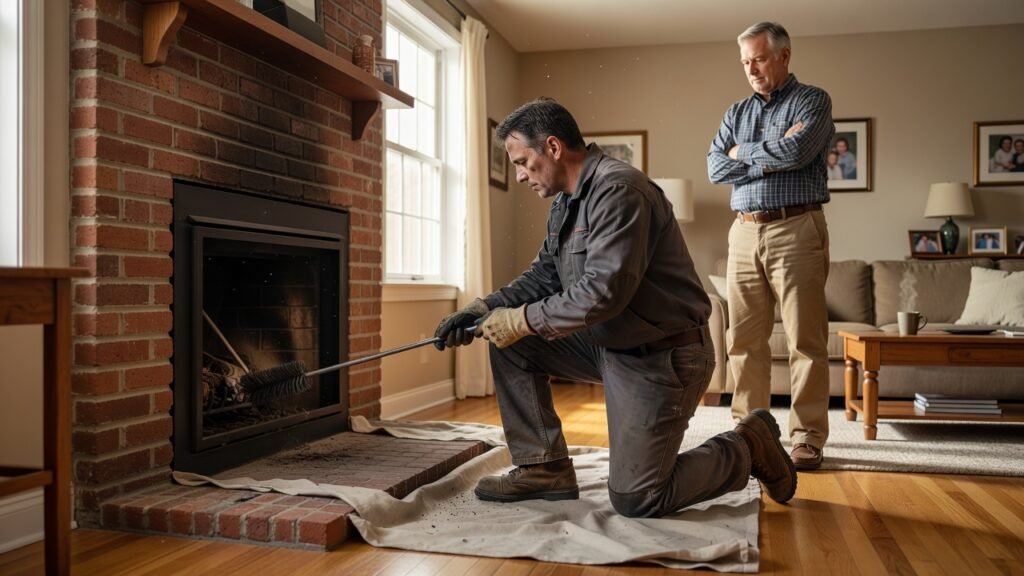
Professional chimney cleaning addresses deposits inside the venting system. CSIA describes standard cleaning as using brushes to clean chimney walls, with a properly filtered vacuum helping prevent soot and creosote from entering the home. Hard deposits may require specialized mechanical cleaning techniques.
The appropriate method depends on what is actually inside the chimney. A professional may need to evaluate the type and amount of deposits before determining how extensive the cleaning should be.
There is also no reliable single price for every chimney in Nutley or South Orange. Chimney height, configuration, appliance type, accessibility, deposits, and the scope of the inspection can all affect the work involved. Homeowners should compare the scope of service rather than relying on a generic local price range.
“Gas Fireplaces Don’t Need Any Chimney Maintenance”
Gas appliances do not create the same creosote deposits associated with wood burning, but that does not mean a venting system can be ignored.
EPA recommends having fuel-burning appliances, including fireplaces, inspected by a trained professional and ensuring that flues and chimneys are connected, in good condition, and free of blockages. Blocked, leaking, or damaged chimneys and flues can allow combustion gases, including carbon monoxide, to enter the home.
The appropriate maintenance depends on the specific gas appliance and venting system. A gas fireplace or insert connected to a chimney may need inspection even when creosote cleaning is not the primary concern.
Homeowners should also follow the appliance manufacturer’s inspection and maintenance requirements rather than assuming that a normal-looking flame means the entire venting system is functioning properly.
“My Chimney Was Swept Last Year, So I’m Good for a While”
An annual inspection is not the same thing as an automatic annual sweeping requirement.
CSIA follows NFPA guidance recommending that chimneys, fireplaces, and vents be inspected at least once a year. Cleaning, maintenance, and repairs should be performed when necessary. The frequency of cleaning depends on use, fuel, installation, and burning habits.
That means a homeowner should not assume that last year’s cleaning guarantees the chimney will remain in the same condition indefinitely. Conversely, homeowners should not assume that every chimney must automatically be swept every year.
Weather and deterioration can also affect chimney condition independently of creosote accumulation. An inspection can identify problems such as deterioration, obstructions, or visible liner defects that may require attention even when the chimney has not been heavily used.
“Chimney Repair Is Always a Major Project”
A chimney problem does not automatically mean a major reconstruction.
An inspection may reveal a relatively limited maintenance issue, such as deteriorated masonry, a damaged cap, or another component that can be addressed without rebuilding the entire chimney. More extensive problems can require substantially more work.
The important point is that repair scope should follow the inspection findings. Homeowners should ask the contractor to explain what was found, why the recommended repair is necessary, and whether the proposed work is separate from the cleaning.
Fixed repair ranges are not particularly useful without knowing the chimney’s construction, dimensions, accessibility, and condition. A written estimate should identify the actual work being proposed rather than relying on a generic price range.
What Homeowners Should Do Before the Next Burning Season
If your fireplace or wood-burning appliance has been used regularly, arrange an inspection before the next period of regular use if the chimney has not been evaluated within the past year. Annual inspection can help identify deposits, obstructions, and deterioration before they become larger problems.
For wood-burning systems, use properly seasoned wood and operate the appliance according to its instructions. EPA guidance emphasizes proper installation and maintenance of wood-burning systems and recommends annual professional inspection.
If you notice smoke entering the home or suspect that a flue is blocked or damaged, stop using the appliance and have the system evaluated by a qualified professional.
The Bottom Line
Chimney sweeping is only one part of chimney maintenance. A homeowner can inspect the visible firebox and remove routine ash, but those steps do not replace a professional evaluation of the chimney and venting system.
For homeowners in Nutley, South Orange, and surrounding Essex County communities, the better approach is to follow the condition of the system rather than a one-size-fits-all cleaning schedule. Annual inspection, appropriate cleaning, and timely repairs can help keep a chimney or venting system operating as intended.
Dennis Farrell, NFI Certified
Fireplace Specialist
Expert in fireplace insert installation and chimney liner systems across northern NJ.
Related from Maplewood Chimney Services: Chimney Sweep in Maplewood · Chimney Sweep in Maplewood
Our services
Chimney Sweep in Maplewood, NJ · Chimney Sweep in Maplewood · Chimney Sweep in Maplewood · Chimney Sweep in Maplewood · Chimney Sweep in Maplewood · Chimney Sweep in Maplewood
Areas we serve
Maplewood, NJ · Fireplace Repair Maplewood, NJ · Maplewood, NJ · Maplewood, NJ · Maplewood, NJ · Maplewood, NJ · All areas →