
Fact-Checked
Source Material Verified
What Bloomfield Homeowners Get Wrong About Creosote Removal
Most homeowners do not think about creosote until they notice a strong chimney odor, heavy buildup, or a problem during a professional inspection. The fireplace can look perfectly normal from the living room while deposits are accumulating higher inside the flue. This is especially relevant in Bloomfield, where many older homes have masonry chimneys that have been used for decades. Understanding how creosote develops, when regular sweeping is enough, and when specialized removal is necessary can help homeowners make better decisions about chimney maintenance.
“I Only Burn a Little Wood, So There Is Not Much Buildup”
Burning less wood does not necessarily mean less creosote. The way the fire burns matters just as much as how often you use the fireplace.
Wet or unseasoned wood and slow, smoldering fires produce more smoke and can increase creosote formation. When smoke cools inside the flue, combustion byproducts can condense on the liner and create deposits.
Creosote can develop in different forms. Light, flaky deposits are generally easier to remove. Heavier, tar-like deposits require more aggressive cleaning methods. Glazed creosote is particularly difficult to remove and can present a significant fire hazard.
That is why homeowners should not judge the condition of a chimney simply by how frequently they use it.
“The Chimney Was Swept Last Year, So It Should Be Fine”
Regular maintenance is important, but a previous cleaning does not guarantee that the chimney remains free of problems.
A chimney sweep removes accumulated deposits and debris. An inspection evaluates the condition of the chimney system itself. Depending on the circumstances, a more detailed inspection may involve video scanning of the flue.
A Level 2 inspection can be appropriate after certain events or changes, including a chimney fire, a change in the connected appliance or fuel type, or a real estate transaction.
A chimney that has been cleaned regularly can still have a cracked liner, deteriorated mortar joints, damaged components, or other problems that are not visible from the firebox.
“I’d Know If Something Was Wrong”
This is another common misconception.
Some chimney problems produce obvious symptoms. Others do not. Creosote can accumulate inside portions of the flue that homeowners cannot see from below.
Unusual odors, smoke entering the room, pieces of masonry or clay tile falling into the firebox, or visible heavy deposits are all reasons to have the chimney evaluated.
A chimney fire can also cause serious damage to the liner and surrounding structure. The absence of obvious symptoms should not be treated as proof that the chimney is in good condition.
“Creosote Removal Is Just Chimney Sweeping With a Different Name”
There is an important distinction between routine sweeping and removing heavier creosote deposits.
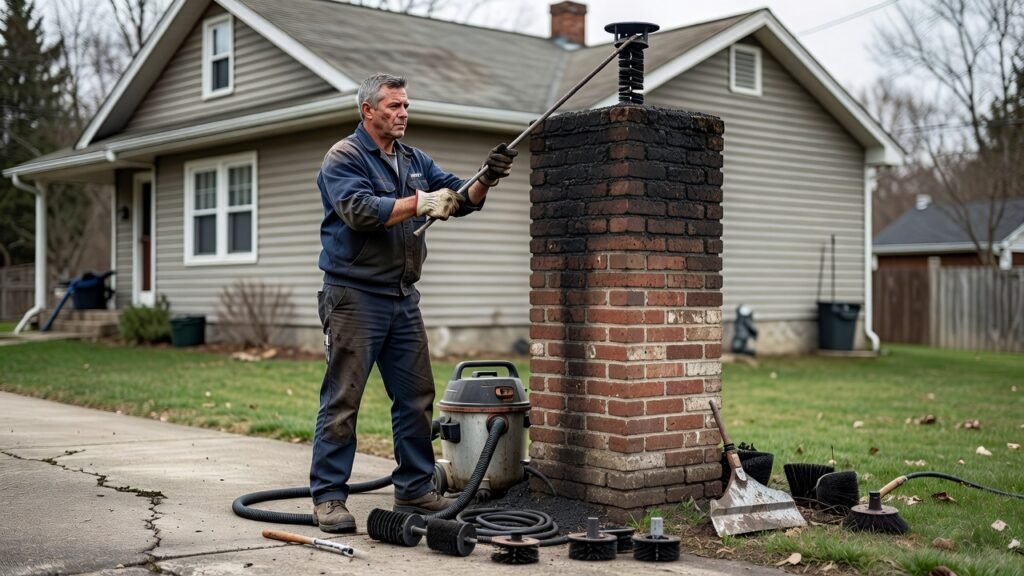
Light deposits can often be removed with standard chimney sweeping equipment. More substantial deposits may require specialized rotary cleaning tools. Glazed deposits can be particularly difficult to remove and may require additional treatment before mechanical cleaning.
The correct approach depends on what the technician finds inside the flue.
Before approving specialized creosote removal, ask the technician to explain:
- What type of buildup was found
- Where the buildup is located
- What cleaning method will be used
- Whether additional treatment is necessary
- What the total cost will be
A qualified chimney professional should be able to explain the condition clearly rather than simply giving you a higher price without documentation.
“The Cost Isn’t Worth It for an Older Fireplace”
Occasional fireplace use does not eliminate the need for maintenance.
A routine chimney cleaning and inspection is generally far less expensive than major chimney repairs or damage caused by a fire. The exact cost depends on the chimney’s height, accessibility, condition, amount of buildup, and whether additional inspection or treatment is necessary.
For homeowners in Bloomfield, Nutley, Belleville, and surrounding Essex County communities, getting an inspection before the heating season can also give you time to address problems before the fireplace is needed regularly.
If you are considering selling an older home, documentation of chimney maintenance can also be useful when questions about the fireplace or chimney arise during the transaction.
What You Can Do to Reduce Creosote Buildup
Homeowners can take several practical steps to reduce the conditions that contribute to creosote.
Burn properly seasoned firewood rather than wet or freshly cut wood. Avoid maintaining fires at very low temperatures for extended periods. Keep the chimney cap in good condition so rain, leaves, and animals cannot enter the flue.
Most importantly, have the chimney inspected regularly and cleaned when the inspection shows that cleaning is necessary.
If You’re Not Sure, Start With an Inspection
If you are unsure how much creosote is inside your chimney, guessing is not the best approach. A professional inspection can determine whether you are dealing with routine maintenance, heavier buildup, or a separate chimney problem.
Maplewood Chimney Services works with homeowners throughout Bloomfield and surrounding Essex County communities, including Nutley, Belleville, Maplewood, South Orange, and Millburn. The company offers chimney inspections to help homeowners understand the condition of their chimney before deciding what work is necessary.
If you are concerned about creosote or cannot remember when your chimney was last inspected, schedule an inspection before using the fireplace again.
Related reading
Dennis Farrell, NFI Certified
Fireplace Specialist
Expert in fireplace insert installation and chimney liner systems across northern NJ.
Related from Maplewood Chimney Services: Fireplace Cleaning in Maplewood, NJ · Chimney Sweep in Maplewood
Our services
Chimney Sweep in Maplewood · Chimney Sweep in Maplewood · Chimney Sweep in Maplewood · Chimney Sweep in Maplewood, NJ · Chimney Sweep in Maplewood · Chimney Sweep in Maplewood
Areas we serve
Maplewood, NJ · Fireplace Repair Maplewood, NJ · Maplewood, NJ · Maplewood, NJ · Maplewood, NJ · Maplewood, NJ · All areas →