
Fact-Checked
Source Material Verified
What Actually Happens When a Chimney Sweep Comes to Your South Orange Home
Most homeowners in South Orange and West Orange schedule a chimney sweep without knowing exactly what the technician will do once they arrive. That uncertainty is worth clearing up. Understanding the process helps you ask better questions, recognize red flags, and know what you’re paying for.
A professional chimney service involves more than running a brush through the flue. The technician should evaluate the accessible parts of the chimney system, identify potential problems, clean the flue when needed, and explain what they find. Here’s what you can expect from the moment the technician arrives at your South Orange home to the time you receive the final report.
What to Know About South Orange Chimneys Before Your Appointment
South Orange and West Orange have many older homes, including Tudors, Colonials, and brick Victorians built between 1910 and 1950. Many of these properties have masonry chimneys with clay tile flue liners that have been exposed to decades of heating cycles, moisture, and freeze-thaw conditions.
That age makes regular inspection especially important. A firebox can look clean while the flue above it has cracks, deteriorated mortar, creosote buildup, or other problems that aren’t visible from inside the room.
NFPA 211 calls for chimneys and fireplaces to be inspected at least annually when they are in use, and the CSIA recommends regular inspection as part of responsible chimney maintenance.
Before your appointment, be prepared to tell the technician what type of appliance you have, what fuel it uses, approximately how old the system is, and whether you’ve noticed smoke odors, draft problems, water intrusion, or visible damage.
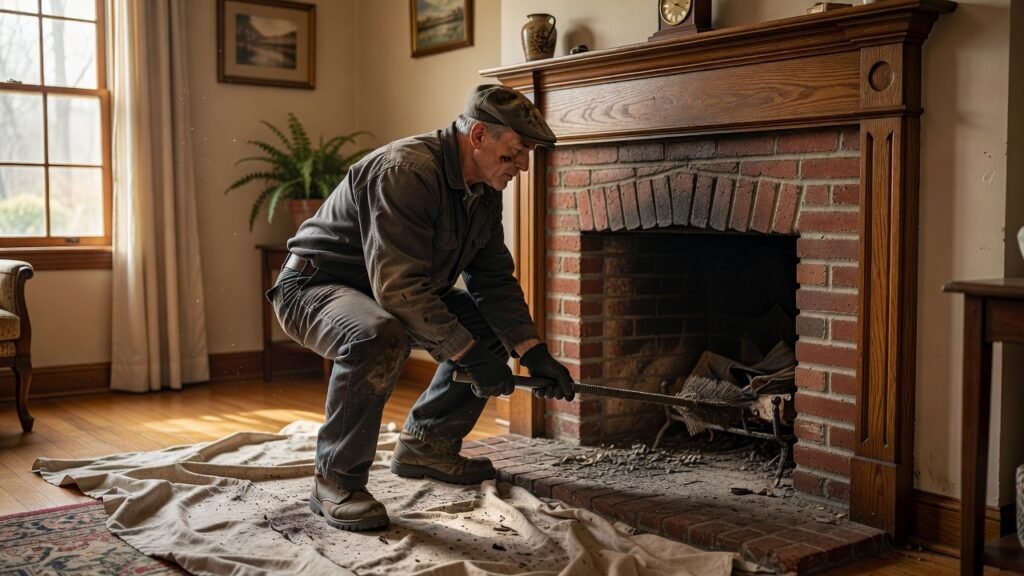
You should also clear furniture and decorative items away from the fireplace. Remove loose ash, fireplace tools, and anything else that could interfere with access. A professional crew should use protective coverings and appropriate vacuum equipment to control dust and debris.
Step 1: The Technician Starts With an Exterior Assessment
A thorough chimney visit doesn’t begin with a brush. The technician should first look at the chimney from the outside.
From ground level, they can evaluate the visible masonry, chimney crown, cap, and flashing. In South Orange’s older neighborhoods, deteriorated crowns and spalling brick are common concerns because water can enter through damaged masonry and gradually worsen the chimney structure.
If roof access is safe and appropriate, the technician may inspect the chimney more closely from above. This allows them to evaluate the cap, crown, masonry, and visible portions of the flue termination.
The technician is looking for issues such as:
- Cracked or deteriorated mortar
- Spalling brick
- Damaged or missing chimney caps
- Cracks in the crown
- Rust or deterioration around metal components
- Improperly fitted chimney caps
- Signs of water intrusion
- Potential animal or debris entry
These exterior problems can eventually affect the interior of the chimney, so identifying them early can prevent more expensive repairs.
Step 2: The Firebox and Damper Are Checked
Once inside, the technician examines the firebox and damper.
Older South Orange homes often have cast-iron damper assemblies that have been exposed to years of heat and moisture. Corrosion can make a damper difficult to operate or prevent it from sealing correctly.
The technician should check whether the damper opens and closes properly and look for visible signs of deterioration.
The firebox itself is also examined for damaged firebrick, refractory panels, cracks, or deteriorated mortar joints.
Small surface cracks aren’t necessarily a major structural problem. Deeper cracks, missing material, or deteriorated joints require closer evaluation because they can affect the fireplace’s ability to contain heat and combustion gases.
Step 3: The Chimney Is Swept
For a wood-burning fireplace, cleaning is the central part of a chimney sweep appointment.
The technician uses brushes and other appropriate equipment to remove creosote, soot, ash, and debris from the flue. The equipment should be selected according to the size and configuration of the chimney.
Creosote is a byproduct of wood combustion and can accumulate on the interior walls of the flue. The amount and consistency of the buildup can vary significantly depending on factors such as wood moisture, burning habits, draft, and how frequently the fireplace is used.
Light deposits may be relatively easy to remove. Heavier or glazed deposits can require additional equipment or treatment.
A professional crew should also take reasonable steps to contain the debris during cleaning. Drop cloths and appropriate vacuum equipment help prevent soot from spreading throughout the room.
When the work is performed properly, homeowners should not be left with a room full of visible soot and debris.
Step 4: The Technician Inspects the Flue
Cleaning the flue and inspecting its condition are two different parts of chimney service.
The technician needs to determine whether there are visible problems with the accessible chimney system, including the flue, smoke chamber, and other components that can be evaluated under the applicable inspection level.
A camera inspection may be appropriate when the chimney’s condition, history, appliance changes, property transaction, or other circumstances call for a Level 2 inspection.
Video scanning can reveal problems that aren’t visible from the fireplace opening, including cracks, displaced liner sections, deterioration, or obstructions deeper inside the flue.
This can be particularly important in older South Orange and West Orange homes where clay tile liners have been exposed to decades of thermal cycling.
If a camera inspection is performed, ask whether the technician can show you the relevant images and explain what they mean.
Step 5: You Receive the Findings and Recommendations
At the end of the appointment, the technician should explain what was found.
If the chimney is in good condition, you should be told that clearly. If something requires attention, the technician should explain the problem, why it matters, and what repair options are available.
Ask for the findings in writing whenever possible.
A useful report may document:
- The work performed
- Visible chimney conditions
- Creosote or debris buildup
- Damper condition
- Firebox condition
- Flue findings
- Exterior masonry concerns
- Recommended repairs
- Photos when applicable
If repairs are recommended, request an itemized written estimate before authorizing additional work.
That gives you an opportunity to understand the scope and compare costs if necessary.
How Much Does a Chimney Sweep Cost in South Orange?
A standard chimney sweep and inspection for a wood-burning fireplace in the South Orange and West Orange area may cost approximately $175 to $275, depending on factors such as flue height, accessibility, configuration, and buildup.
More extensive inspections, repairs, relining, waterproofing, or other work will cost more.
The cheapest quote isn’t necessarily the best value. When comparing companies, ask what the price includes and whether inspection, cleaning, documentation, and any additional services are separate charges.
A reputable contractor should be able to explain the scope before work begins.
What If Your Fireplace Still Smells After Cleaning?
A smoky odor after a chimney cleaning doesn’t necessarily mean the sweep failed.
Several issues can contribute to persistent odors, including:
- Negative air pressure inside the home
- A damper that doesn’t seal properly
- Residual creosote in areas that weren’t fully addressed
- Moisture entering the chimney
- Problems with the chimney cap or exterior masonry
If the odor persists, don’t simply assume you need another cleaning. The underlying cause should be identified first.
If you’re experiencing smoke coming into the room during fireplace use, stop using the fireplace until the problem has been evaluated.
What a Good Chimney Service Should Look Like
A professional chimney appointment should be organized, transparent, and easy for the homeowner to understand.
You should know what service you’re paying for, what the technician is inspecting, what was cleaned, and whether anything requires further attention.
Be cautious if a technician immediately recommends expensive repairs without showing you the evidence. You should also be cautious if someone refuses to explain what their inspection includes or won’t provide documentation for significant findings.
The goal of a chimney inspection isn’t to find something wrong. It’s to determine whether your system is safe to use and identify problems before they become more expensive.
Schedule Your South Orange Chimney Service Before the Heating Season
Maplewood Chimney Services serves South Orange, West Orange, Maplewood, Millburn, and surrounding Essex County communities.
If your fireplace hasn’t been swept recently or you aren’t sure when it was last inspected, scheduling an evaluation before the heating season is a practical place to start.
You’ll know what condition your chimney is in, what work it actually needs, and what can wait. A professional assessment gives you that information before the first cold night turns a small chimney problem into a much bigger one.
Dennis Farrell, NFI Certified
Fireplace Specialist
Expert in fireplace insert installation and chimney liner systems across northern NJ.
Related from Maplewood Chimney Services: Chimney Sweep in Maplewood · Chimney Sweep in Maplewood
Our services
Fireplace Installation · Flue Repair · Chimney Cap Installation · Dryer Vent Cleaning · Chimney Liner Installation Maplewood · Chimney Crown Repair Maplewood
Areas we serve
Fireplace Repair Maplewood, NJ · Maplewood, NJ · Maplewood, NJ · Maplewood, NJ · Maplewood, NJ · Maplewood, NJ · All areas →