
Fact-Checked
Source Material Verified
Chimney Cap Repair Cedar Grove NJ: Problems to Watch For
A chimney cap has an important job. It helps keep rain, debris, and animals from entering the chimney while allowing the system to vent properly. When a cap is missing, damaged, corroded, or poorly fitted, the problem can extend beyond the cap itself. Water intrusion, blocked openings, masonry deterioration, or animal nesting may require a broader inspection. For Cedar Grove homeowners, understanding the common problems can help determine when a chimney cap needs repair or replacement.
Common Chimney Cap Problems
1. The Chimney Cap Is Missing or Damaged
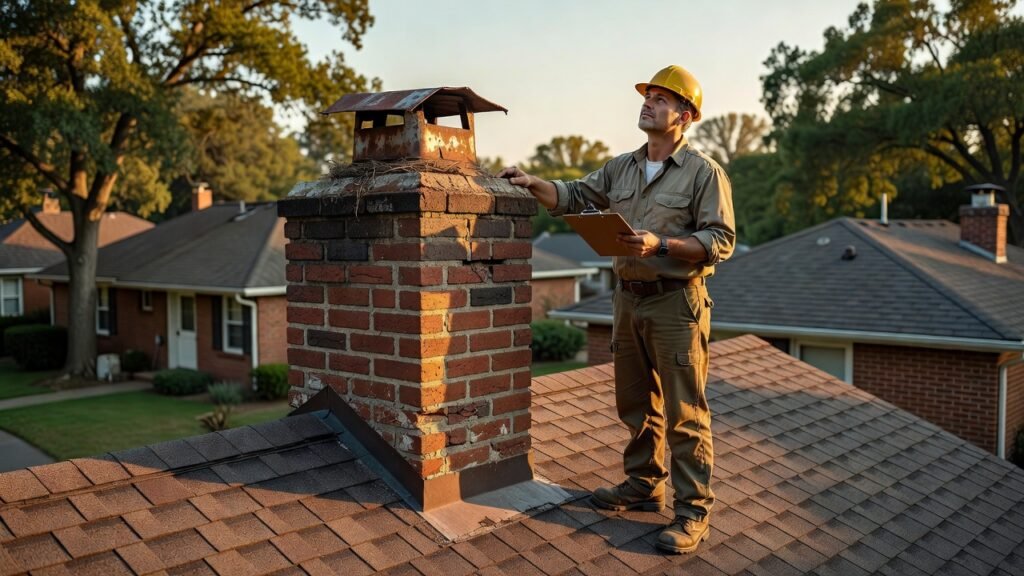
A missing cap leaves the chimney opening exposed to weather and debris. A damaged or corroded cap can also create openings that allow water or animals to enter.
Signs of a problem can include visible deterioration at the top of the chimney, water-related staining, debris inside the fireplace, or evidence of animal activity.
The appropriate repair depends on the condition of the existing cap and the chimney structure beneath it. A professional should evaluate the cap, its attachment, the crown or top surface, and accessible portions of the chimney before recommending replacement.
A replacement cap should be properly sized for the chimney and compatible with the flue configuration. Stainless steel is one material option for chimney caps, while other materials may also be appropriate depending on the installation.
2. The Cap Screen Is Blocked
Many chimney caps include screens designed to help keep animals and larger debris out of the flue. Those screens can accumulate leaves, soot, nesting material, or other debris.
A blocked screen can interfere with proper venting. If a homeowner notices smoke entering the room, unusual fireplace performance, or visible debris around the chimney opening, the system should be evaluated rather than simply continuing to use the fireplace.
Cleaning the screen may solve the immediate problem when the cap itself is in good condition. If the screen is damaged or the cap is badly corroded, replacement may be more appropriate.
The correct screen design depends on the appliance, chimney configuration, applicable requirements, and manufacturer specifications. Homeowners should avoid assuming that one mesh size is appropriate for every chimney.
3. The Cap Does Not Match a Multi-Flue Chimney
A chimney serving multiple flues needs a cap or cover designed for that configuration. Installing a small cap over only one opening may leave another flue exposed.
This can be particularly important when several appliances or fireplaces share a chimney structure. The contractor should identify the number and arrangement of flues before ordering a replacement.
For larger or unusual chimneys, a custom-fabricated cap or chase cover may be appropriate. The important point is accurate measurement and compatibility with the existing chimney rather than choosing a replacement based only on appearance.
4. The Chimney Crown Is Damaged
A chimney cap cannot compensate for a deteriorated chimney crown or other damaged masonry.
Cracks, deterioration, or improper drainage at the top of the chimney can allow water to enter the masonry. Depending on the construction, water intrusion can contribute to further deterioration of masonry components.
If crown damage is found during a cap replacement, the contractor should explain whether the crown needs maintenance or repair. The cap and crown serve different functions, so replacing one does not automatically resolve a problem with the other.
Homeowners should also be cautious about assuming that every visible hairline crack requires complete crown reconstruction. The appropriate repair depends on the extent and condition of the damage.
5. Animals Have Entered the Chimney
An exposed or damaged chimney opening can provide an entry point for birds, squirrels, raccoons, and other animals.
Evidence may include scratching sounds, nesting material, feathers, droppings, or debris inside the fireplace. Before removing suspected nesting material, homeowners should consider whether protected wildlife may be involved. Certain birds and their active nests are protected under federal or state wildlife laws.
If animal activity is suspected, a qualified professional can determine whether the chimney is obstructed and whether the cap or screen needs repair.
After an obstruction is safely addressed, the chimney opening should be protected with an appropriately designed cap or screen to reduce the likelihood of another entry.
6. The Real Water Problem Is the Flashing
Not every chimney leak comes from the cap.
Flashing is installed where the chimney meets the roof. If that connection fails, water can enter around the chimney even when the cap appears to be in good condition.
Other possible sources include the crown, masonry, roof materials, or joints around the chimney. That is why a contractor should evaluate the surrounding system rather than automatically recommending cap replacement whenever water is reported.
If the flashing is responsible for the leak, repairing the flashing addresses the actual problem. Replacing an otherwise functional cap would not solve the underlying source.
When Should a Chimney Be Inspected?
CSIA recommends that chimneys, fireplaces, and vents be inspected at least once a year. Cleaning, maintenance, and repairs should be performed when they are needed.
A routine inspection does not automatically mean that every chimney requires a Level 2 inspection or an interior video scan.
CSIA describes Level 1 as the appropriate inspection level for routine situations when no significant changes have occurred. A Level 2 inspection has a broader scope and is recommended in circumstances such as certain appliance or fuel changes, property transfer, relining, or events that may have damaged the chimney.
If an animal obstruction, suspected chimney damage, or another condition cannot be adequately evaluated during a Level 1 inspection, the professional can explain whether additional inspection is appropriate.
How to Choose a Chimney Cap Contractor in Cedar Grove
Start by looking for a professional with relevant chimney experience. CSIA maintains a directory that homeowners can use to verify CSIA credentials.
Ask what the contractor plans to inspect before replacing the cap. A proper evaluation may include the cap, flue configuration, crown, accessible masonry, and the chimney-to-roof area when water intrusion is involved.
You should also receive a clear explanation of what the estimate covers. If the contractor identifies a damaged crown, flashing problem, liner issue, or other repair, ask whether that work is included in the original quote or priced separately.
A trustworthy contractor should be able to explain the reason for the recommended work without relying on pressure or vague claims about imminent failure.
What About Chimney Cap Replacement Costs?
There is no dependable single price for chimney cap work in Cedar Grove. Costs can vary considerably depending on the cap material, chimney dimensions, number of flues, fabrication requirements, access, and whether the existing crown or masonry needs attention.
A standard replacement cap is not necessarily comparable to a custom cap or chase cover for a large multi-flue chimney. Additional repairs can also change the total project cost.
Instead of relying on a generic online price range, ask for an itemized estimate that identifies the cap being installed, the work included, and any separate repairs being recommended.
The Bottom Line
A chimney cap problem is not always just a cap problem. Missing or damaged caps can allow water, debris, or animals into the chimney, while crown and flashing problems can create similar symptoms.
For Cedar Grove homeowners, the best approach is to have the chimney evaluated before deciding what needs to be replaced. A qualified contractor can determine whether the cap itself is defective, whether another component is causing the problem, and what work is actually necessary.
Related reading
Robert Callahan, CSIA Certified Chimney Sweep
Lead Sweep Technician
15 years serving Maplewood and Essex County homeowners with chimney cleaning and repair.
Related from Maplewood Chimney Services: Chimney Sweep Services in Maplewood, NJ · Chimney Sweep in Maplewood · Chimney Sweep in Maplewood
Areas we serve
Maplewood, NJ · Maplewood, NJ · Maplewood, NJ · Maplewood, NJ · Fireplace Repair Maplewood, NJ · Maplewood, NJ · All areas →