
Fact-Checked
Source Material Verified
Hiring a Chimney Pro in Nutley: What Wood-Burning Fireplace Owners Actually Need to Know
Most Nutley homeowners who use a wood-burning fireplace can handle some basic maintenance themselves. The important question is knowing where routine homeowner care ends and professional chimney service begins.
A professional inspection can identify conditions that are difficult to see from the fireplace, including deposits, blockages, damaged components, or problems with the chimney and venting system. This guide explains what you can reasonably do yourself, what to ask a chimney professional, and how to compare companies serving Nutley, NJ.
Why Wood-Burning Fireplace Maintenance Matters
Burning wood produces smoke and combustion byproducts that can accumulate in the chimney. Creosote is one of the deposits that can form inside a chimney, particularly when wood is burned with excessive moisture or insufficient combustion.
EPA recommends having a wood-burning appliance and chimney inspected annually. It also recommends burning dry, seasoned wood and checking its moisture content with a moisture meter. EPA says wood with moisture content below 20% is best for efficient burning.
CSIA also recommends an annual chimney inspection, with cleaning performed when the condition of the chimney indicates that cleaning is necessary.
That distinction matters. Annual inspection does not necessarily mean every chimney needs to be mechanically swept every year. The appropriate cleaning frequency depends on factors such as how often the fireplace is used, the type of fuel burned, the installation, and burning habits.
What a Homeowner Can Reasonably Handle
Homeowners can perform several basic maintenance tasks without attempting to inspect or repair the chimney itself.
Firebox and Ash Maintenance
You can remove cooled ash from the fireplace when necessary.
Do not rely on a fixed 24-hour waiting period because cooling time varies depending on the amount of ash, the last fire, and other conditions. Treat ashes as potentially hot until they are completely cool.
When removing ashes, use an appropriate metal container with a secure lid. Keep the container away from combustible materials.
You do not need to remove every trace of ash after every fire. Some fireplace designs can benefit from a small amount of ash remaining in the firebox.
Basic Visual Checks
You can inspect the areas that are safely visible from the fireplace.
Look for:
- Large cracks in visible firebrick
- Damaged or loose components
- Unusual staining
- Excessive visible deposits
- Problems with the damper
- Debris falling into the firebox
A visible problem does not necessarily identify its cause. If you notice significant deterioration, have the chimney evaluated rather than attempting to repair the component yourself.
Burn Dry, Seasoned Wood
One of the most useful things homeowners can control is the condition of the firewood.
EPA recommends burning dry, seasoned wood and says moisture below 20% is best. A moisture meter can help determine whether split firewood is ready to burn.
Wet wood produces more smoke and can contribute to increased creosote formation. Burning properly seasoned wood also improves combustion efficiency.
Where DIY Maintenance Should Stop
Chimney maintenance becomes more complicated once you move beyond the visible fireplace area.
The flue, smoke chamber, chimney exterior, liner, crown, flashing, and chimney termination may require specialized knowledge or equipment to evaluate properly.
A flashlight from the firebox cannot provide a complete inspection of the chimney. Some portions may be inaccessible, and certain conditions may require additional inspection methods.
Homeowners should also avoid climbing onto the roof simply to inspect or repair a chimney cap. Roof work introduces fall hazards that are separate from the chimney problem itself.
Understanding Chimney Inspection Levels
Not every chimney requires the same type of inspection.
Level 1 Inspection
A Level 1 inspection is generally appropriate when there are no known changes to the appliance or chimney system and the accessible portions can be adequately examined.
It is commonly associated with routine annual inspections.
Level 2 Inspection
A Level 2 inspection is more extensive.
CSIA guidance identifies circumstances that can call for a Level 2 inspection, including a property sale, relining, a chimney or building fire, certain weather or seismic events, or an operating malfunction that could have caused damage.
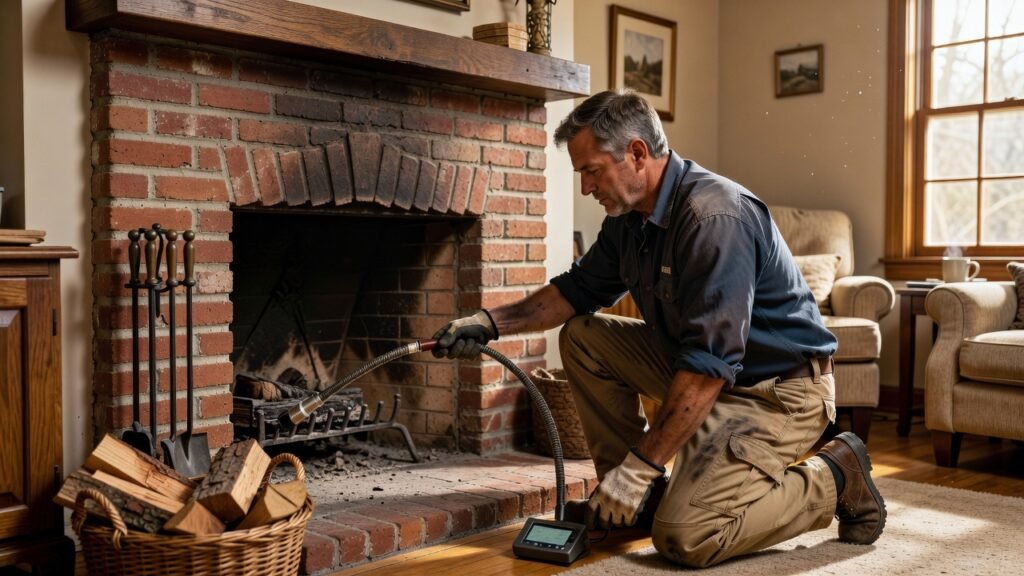
A Level 2 inspection includes the elements of a Level 1 inspection plus examination of accessible areas such as attics, basements, and crawl spaces. It also requires video scanning or a similar examination of the chimney interior.
That means a Level 2 inspection is not automatically required simply because you are buying a home or because the chimney is old. The inspection level should be based on the circumstances and condition of the system.
Does Every Chimney Cleaning Need a Camera?
No.
Video inspection can provide valuable information about the interior of a chimney, especially when a Level 2 inspection is appropriate. But it should not be presented as a mandatory part of every routine sweep.
When a company recommends a camera inspection, ask why it is appropriate for your chimney.
Useful questions include:
- What condition prompted the recommendation?
- Is a Level 2 inspection being performed?
- What areas will be inspected?
- Will the findings be documented?
- Is the video inspection included in the quoted price?
A good technician should be able to explain the purpose of the additional inspection rather than simply presenting it as a mandatory upgrade.
Credentials to Look For
Credentials can help homeowners compare chimney professionals, but no single certification replaces good business practices and appropriate insurance.
CSIA Certification
The Chimney Safety Institute of America offers the Certified Chimney Sweep credential. Homeowners can ask whether the person performing the work holds current CSIA certification and verify the credential through CSIA.
NFI Certification
The National Fireplace Institute offers certifications related to hearth appliances and venting. NFI certification can be particularly relevant when the project involves appliance installation or related hearth-system work.
Insurance
Ask the company for evidence of appropriate insurance before allowing workers to perform roof or chimney work.
New Jersey requires covered employers to maintain workers’ compensation insurance or qualify for self-insurance.
However, homeowners should not assume that simply seeing the words “fully insured” in an advertisement tells them everything about the company’s coverage. Asking for current documentation is more useful.
Questions to Ask Before You Book
A few questions can make comparing chimney companies much easier.
“Are you CSIA certified?”
If the company says yes, ask for the technician’s name and verify the current credential.
“What inspection level are you performing?”
Ask whether the appointment is Level 1 or Level 2 and what the inspection includes.
“Is video scanning included?”
If a camera is recommended, ask whether it is part of a Level 2 inspection or being proposed for another reason.
“What is included in the cleaning?”
Find out whether the quoted service includes the fireplace, accessible chimney areas, and removal of ordinary deposits and debris.
“What happens if you find a repair?”
Ask whether additional work requires your approval before it begins.
“Will I receive documentation?”
A written report, photographs, or other documentation can be useful when repairs are recommended. The exact documentation provided varies by company.
“Can you provide a written estimate?”
A written estimate makes it easier to compare different companies on the same scope of work.
Red Flags to Watch For
Be cautious when a company makes major recommendations without explaining what was found.
Some warning signs include:
- Pressure to approve expensive repairs immediately
- Vague explanations of the alleged problem
- No written scope of work
- Refusal to identify the inspection level
- Recommendations that cannot be supported with photographs or other documentation when such evidence should be available
- Unexpected charges that were not explained before work began
- Claims that every chimney automatically requires the same repair or inspection
An unusually low advertised price is not automatically proof of poor workmanship. The more useful question is what the advertised service actually includes.
Comparing Chimney Quotes in Nutley
When comparing two or three companies, make sure the estimates cover the same scope.
For example, one company might quote only a routine sweep. Another might include a Level 2 inspection. A third might include cleaning plus a recommended repair.
Those are not equivalent services.
Ask each company to identify:
- Inspection level
- Cleaning scope
- Additional inspection procedures
- Recommended repairs
- Materials
- Labor
- Permit-related work, if applicable
- Whether additional work requires approval
This gives you a much better basis for comparing quotes than looking at the bottom-line number alone.
What About Chimney Repair Costs?
Chimney repairs vary too widely to publish a reliable universal Nutley price list without current local estimates.
The cost can depend on the extent of deterioration, access, materials, chimney construction, liner type, and the amount of work involved.
Common repairs can include:
- Masonry repointing
- Crown repair
- Chimney cap replacement
- Flashing repair
- Liner repair or replacement
- Waterproofing
- Damper repair
- Structural masonry repair
If a company recommends a major repair, ask for a written description of the problem and the proposed solution. For expensive work, obtaining another estimate can help you compare the scope and materials.
Do Older Chimneys Need Special Attention?
Age alone does not determine whether a chimney is unsafe or whether it needs a Level 2 inspection.
Older masonry chimneys may contain clay tile liners or components that have experienced many years of use. But the condition of the individual chimney matters more than the construction date alone.
Look for evidence such as:
- Cracked or deteriorated masonry
- Damaged chimney components
- Water intrusion
- Excessive deposits
- Changes in appliance use
- Problems with venting
- Evidence of a chimney fire
A professional inspection can determine what additional evaluation is appropriate.
Before You Hire a Chimney Professional in Nutley
The goal is not simply to find the cheapest chimney sweep.
Look for a company that can explain the inspection level, describe the cleaning process, document significant findings, provide a clear estimate, and explain why additional work is being recommended.
For wood-burning fireplace owners in Nutley, regular inspection and responsible burning practices are two important parts of chimney maintenance. EPA recommends annual inspection of wood-burning appliances and chimneys and advises homeowners to burn dry, seasoned wood with moisture below 20%.
If your fireplace has not been inspected recently, arranging an inspection before regular seasonal use gives you an opportunity to identify problems before you need the fireplace most.
Robert Callahan, CSIA Certified Chimney Sweep
Lead Sweep Technician
15 years serving Maplewood and Essex County homeowners with chimney cleaning and repair.
Related from Maplewood Chimney Services: Fireplace Cleaning in Maplewood, NJ · Chimney Sweep in Maplewood
Areas we serve
Maplewood, NJ · Maplewood, NJ · Maplewood, NJ · Fireplace Repair Maplewood, NJ · Maplewood, NJ · Maplewood, NJ · All areas →