
Fact-Checked
Source Material Verified
Wood-Burning Fireplace Maintenance in Bloomfield, NJ: What You Can Do Yourself and When to Call a Pro
Most Bloomfield homeowners who use wood-burning fireplaces know the basics: keep the damper open, burn dry wood, and avoid burning household trash. The harder question is knowing where routine homeowner maintenance ends and professional chimney work begins. That distinction matters in Bloomfield, where many older homes have masonry chimneys that can hide deterioration beyond what you can see from the firebox. This guide explains what you can safely check yourself, what requires professional equipment, and which warning signs mean you should stop using the fireplace until it has been inspected.
Start With Basic Firebox Maintenance
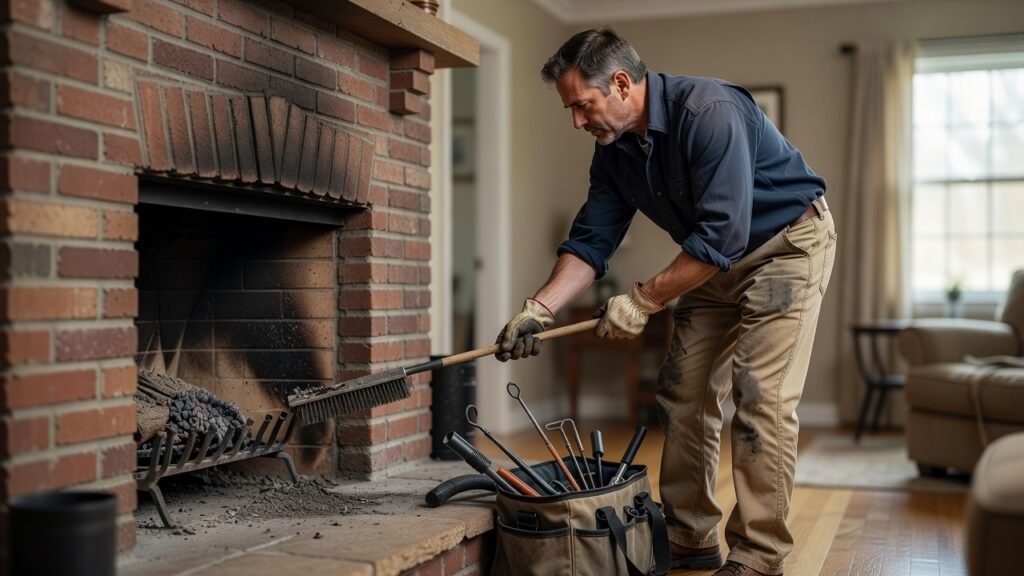
Before inspecting your fireplace, make sure the fire has been completely extinguished and the ashes are cool. Remove excess ash with a metal shovel or fireplace-rated vacuum. Leaving a small amount of ash can help insulate the firebox, but excessive buildup should be removed regularly.
You can also inspect your smoke and carbon monoxide alarms before the heating season. Test the alarms and replace batteries or units as recommended by the manufacturer.
A flashlight, inspection mirror, and appropriate protective equipment can help you examine the accessible areas of the fireplace without attempting to enter the chimney or climb onto the roof.
Step 1: Inspect the Firebox for Damage
Look carefully at the back wall, side walls, floor, and joints between the firebricks.
Small cracks in mortar joints can occur with age and heat exposure. However, cracked or missing firebrick, large gaps, loose masonry, or sections that are visibly deteriorating deserve professional attention.
Older fireplaces can also develop spalling, where pieces of the firebrick or masonry surface break away. Do not attempt to cover significant damage with ordinary household mortar or sealant. Firebox materials need to be appropriate for high-temperature conditions.
If you see substantial damage, avoid using the fireplace until it has been evaluated.
Step 2: Check the Damper
The damper should open and close without excessive resistance. Operate it only when the fireplace is completely cool.
A damper that sticks can have accumulated soot or corrosion around the mechanism. Light surface debris may be something you can carefully clean from an accessible area.
A warped plate, broken mechanism, seized pivot, or damper that will not fully open or close is different. Repairs can require access to the smoke chamber or masonry around the damper.
If the damper does not operate correctly, have it inspected before using the fireplace.
Step 3: Look at the Smoke Shelf
The smoke shelf sits behind or above the damper and can collect debris, soot, and nesting material.
You can inspect the accessible area with a flashlight and mirror. Loose debris can be removed carefully from the firebox when the fireplace is cold.
Heavy creosote, substantial debris, or evidence of an animal nest should not be treated as routine homeowner maintenance. These conditions can indicate a larger problem inside the flue.
Step 4: Know the Limits of a DIY Flue Inspection
This is where homeowners need to be especially careful.
Looking upward from the firebox may show only a small portion of the flue. You cannot reliably determine the condition of the entire liner with a flashlight.
Light soot may be relatively easy for a professional sweep to remove. Heavy, sticky, or glazed creosote requires more specialized cleaning methods and can represent a significant fire hazard.
Likewise, a flashlight cannot reliably identify cracks, displaced clay tiles, or deterioration higher in the chimney.
If you see pieces of clay tile or masonry falling into the firebox, notice heavy creosote, or suspect a damaged liner, stop using the fireplace and arrange a professional inspection.
Step 5: Inspect the Chimney From the Ground
You do not need to climb onto the roof to perform a basic exterior check.
From the yard or sidewalk, look for obvious problems such as:
- A missing chimney cap
- A visibly damaged or rusted cap
- Large cracks in the crown
- Missing or damaged bricks
- Crumbling mortar
- White staining or efflorescence on the masonry
- Vegetation growing around the chimney
A missing cap can allow rain, leaves, and animals into the chimney. Moisture intrusion can contribute to masonry deterioration and damage to internal components.
If you notice significant exterior deterioration, have a professional inspect it rather than attempting a roof-level repair yourself.
Step 6: Schedule Your Annual Professional Inspection
Homeowners can handle routine cleaning and visual checks, but a professional inspection is still an important part of fireplace maintenance.
For a chimney that is regularly used, annual inspection is a practical maintenance schedule. The appropriate inspection level depends on the chimney’s condition, history, and whether changes have been made to the connected appliance or venting system.
A Level 2 inspection includes video examination of the accessible portions of the flue and may be appropriate after certain changes or events, such as a property sale, appliance change, or suspected chimney damage.
For Bloomfield homeowners, scheduling in late summer or early fall can provide more time to address repairs before the busiest part of the heating season.
A standard inspection and cleaning for a single flue may vary based on chimney height, accessibility, buildup, and condition. Ask for the total price and exactly what the service includes before work begins.
What You Should Not Attempt Yourself
Some chimney work is better left to a qualified professional.
This includes:
- Repairing or replacing a damaged flue liner
- Removing heavy or glazed creosote
- Performing a full chimney camera inspection
- Rebuilding a chimney crown
- Major masonry or tuckpointing work
- Replacing an inaccessible or damaged damper
- Working on the chimney from a steep or elevated roof
- Servicing gas appliances or fireplace inserts
The reason is not simply that the work is complicated. Mistakes can affect draft, fire safety, combustion gases, and the structural components surrounding the chimney.
What to Do if Smoke Enters the Room
Smoke backing into the room should never be treated as normal.
Possible causes include a cold flue, blocked chimney, damper problem, negative pressure inside the home, or an issue with the fireplace and flue configuration.
A cold flue can sometimes contribute to poor draft when a fire is first started. However, if smoke continues entering the room after the fireplace has been operating, stop using it.
Do not rely on opening a window and continuing to burn if the problem persists. Have the chimney evaluated first.
Carbon monoxide is odorless, so a fireplace that is not drafting properly should be treated seriously.
Know When to Call a Professional
The best DIY approach is knowing what you can safely observe without assuming you can diagnose everything yourself.
You can clean excess ash, check the damper, inspect the firebox, look for visible exterior damage, and test your smoke and carbon monoxide alarms. What you cannot safely determine from the hearth is the condition of the entire flue liner or the severity of hidden creosote and masonry deterioration.
Maplewood Chimney Services works with homeowners throughout Bloomfield and surrounding Essex County communities, including Montclair, Glen Ridge, Nutley, and Belleville. If your fireplace is due for an inspection or you have noticed signs of deterioration, contact the company for an estimate.
Getting the chimney checked before the heating season is underway gives you time to address problems before they become urgent.
Dennis Farrell, NFI Certified
Fireplace Specialist
Expert in fireplace insert installation and chimney liner systems across northern NJ.
Related from Maplewood Chimney Services: Fireplace Cleaning in Maplewood, NJ · Chimney Sweep Services in Maplewood, NJ · Chimney Sweep in Maplewood
Our services
Chimney Sweeping · Chimney Repair · Dryer Vent Cleaning · Chimney Sweep in Millburn · Chimney Sweep in South Orange · Chimney Sweep in Maplewood
Areas we serve
Maplewood, NJ · Fireplace Repair Maplewood, NJ · Maplewood, NJ · Maplewood, NJ · Maplewood, NJ · Maplewood, NJ · All areas →