
Fact-Checked
Source Material Verified
What Your Annual Chimney Inspection in Maplewood Is Actually Looking For
Most Maplewood homeowners schedule a chimney inspection because they know they’re supposed to, not because anything seems wrong. That’s exactly the problem. The hazards that cause house fires and carbon monoxide exposure almost never announce themselves. A chimney can look perfectly fine from the living room and still have a fractured flue liner, a blocked passageway, or deteriorating mortar that has been quietly concentrating heat against combustible framing for years.
NFPA 211 requires an annual Level 1 chimney inspection for chimneys in regular use, and the CSIA recommends the same. These aren’t suggestions designed to generate service calls. They come from decades of documented fire investigations in which the cause can be traced to deferred maintenance that a standard inspection could have identified. Here’s what a real diagnostic inspection looks for in homes across Maplewood, South Orange, Millburn, and the rest of Essex County, and what it can mean when a problem is found.
Creosote Buildup Beyond Stage One
What you may notice: A faint petroleum-like smell near the firebox, or nothing at all.
What the technician finds: Creosote in Stage 2 or Stage 3, meaning it is no longer the dry, brushable flake associated with occasional fireplace use. Instead, it has become a tar-like glaze or a hard, porous crust that standard brushing may not remove.
Stage 1 creosote is routine. Stage 2 and Stage 3 require greater attention because they present a more serious fire hazard. A chimney fire burning inside a flue containing Stage 3 creosote can reach temperatures above 2,000 degrees Fahrenheit. That heat can crack clay tile liners, ignite nearby combustible materials, and allow fire to spread into wall or roof cavities.
The appropriate treatment depends on the stage and condition of the buildup. Stage 2 deposits may require chemical treatment followed by mechanical or rotary cleaning. Stage 3 buildup may require chemical treatment, specialized mechanical removal, and a follow-up inspection of the liner to determine whether the flue has been damaged.
Prevention: Burn properly seasoned hardwood with a moisture content below 20 percent. Maplewood’s older homes, particularly the Tudors and Colonials along Springfield Avenue and the Ridgewood Road corridor, often have fireplaces that were used heavily before gas inserts became common. If you’ve reactivated a fireplace after years of dormancy, have it professionally inspected and cleaned before lighting the first fire.
Cracked or Spalled Flue Liner
What you may notice: Unusual smoke in the room, a persistent burnt smell on upper floors, or nothing visible at all.
What the technician finds: A camera inspection may reveal fractured clay tiles, separated tile joints, or deteriorated mortar that allows combustion gases to migrate into the chimney chase.
This is where diagnostic work becomes especially important. A hairline crack in a lower tile section is different from a complete separation near a corbel. The technician needs to determine the location and extent of the damage and whether the pattern suggests a previous chimney fire or long-term thermal cycling. Those findings can lead to very different repair recommendations.
The repair may range from replacing a damaged tile in an accessible section to installing a stainless steel liner when the damage is extensive or the existing liner is not appropriate for a newer appliance. In Essex County municipalities, liner replacement may also require permits and compliance with applicable local codes. Your contractor should be able to explain those requirements before work begins.
Prevention: Annual inspections can identify early-stage liner damage before it becomes a larger failure. A crack discovered early may be repairable. The same damage left undetected for several years may require a complete liner replacement.
Mortar Joint and Crown Deterioration
What you may notice: Small pieces of masonry in the firebox or white staining, known as efflorescence, on the exterior chimney.
What the technician finds: Eroded mortar joints between brick courses or a chimney crown that has cracked and is allowing water to enter the chimney system.
New Jersey’s freeze-thaw cycles can be particularly hard on masonry. Water enters small cracks in the crown or mortar, freezes, expands, and widens those openings. Repeated cycles can eventually create pathways for water to enter the liner system, firebox, and surrounding areas.
Water damage in a chimney system rarely looks serious at first. A proper inspection includes examining the crown for cracks, checking the depth and condition of mortar joints, and looking for interior staining or other evidence of water migration.
The repair: Depending on the condition, the solution may involve crown repair or replacement and repointing deteriorated mortar joints. A vapor-permeable masonry waterproofing treatment may also help protect sound masonry from future moisture intrusion.
Prevention: Crown and masonry conditions should be evaluated during the annual inspection. Catching a small crown crack early can mean a relatively minor repair. Allowing water to enter the system for several seasons can result in much more extensive masonry work.
Blocked or Restricted Flue
What you may notice: Poor draft, smoke backing into the room, or a firebox that doesn’t draw properly even when the damper is fully open.
What the technician finds: The obstruction may be caused by bird or animal nesting material, a damaged damper, accumulated debris, or a deteriorated smoke chamber that is disrupting airflow.
Maplewood’s tree-heavy neighborhoods can provide easy access for birds and other animals to open chimney flues. Nesting material from chimney swifts, starlings, squirrels, or other animals can partially block a flue without completely stopping airflow.
Even a partial restriction can affect draft and cause combustion gases to spill into the living space. A technician may inspect the flue from the firebox and use a camera from above to determine the location and nature of the obstruction.
The repair: The obstruction should be removed, and the chimney should be inspected for any resulting damage. Installing a properly fitted chimney cap can help prevent future animal and debris intrusion. If the smoke chamber has deteriorated, additional masonry work may be necessary to restore the interior surface and improve airflow.
Prevention: A properly fitted chimney cap with an appropriate screen can significantly reduce the chance of animals and debris entering the flue.
Firebox and Smoke Chamber Damage
What you may notice: Visible cracks in the firebox walls or floor, or mortar falling away around the smoke shelf.
What the technician finds: The inspection may reveal spalled refractory panels, cracked firebrick joints, or open mortar gaps inside the smoke chamber.
Refractory panels in prefabricated fireplaces are designed to withstand repeated heat exposure. When a panel cracks through its full thickness, the protective barrier between the fire and the fireplace’s metal structure can be compromised.
Masonry fireplaces have different concerns. Cracked or deteriorated firebrick and refractory mortar can allow excessive heat and combustion gases to reach areas that should remain protected.
The repair: Damaged refractory panels in prefabricated fireplaces generally need to be replaced with compatible components for the specific manufacturer and model. In masonry fireplaces, damaged firebrick can be replaced and deteriorated joints repaired with appropriate refractory mortar.
Prevention: Annual inspections can identify firebox and smoke chamber deterioration before the damage becomes more extensive. When hiring a chimney professional, look for appropriate credentials, including CSIA certification, and make sure the technician evaluates the entire fireplace system rather than simply cleaning the flue.
What Happens During an Annual Inspection?
A proper Level 1 inspection is more than a quick look inside the firebox.
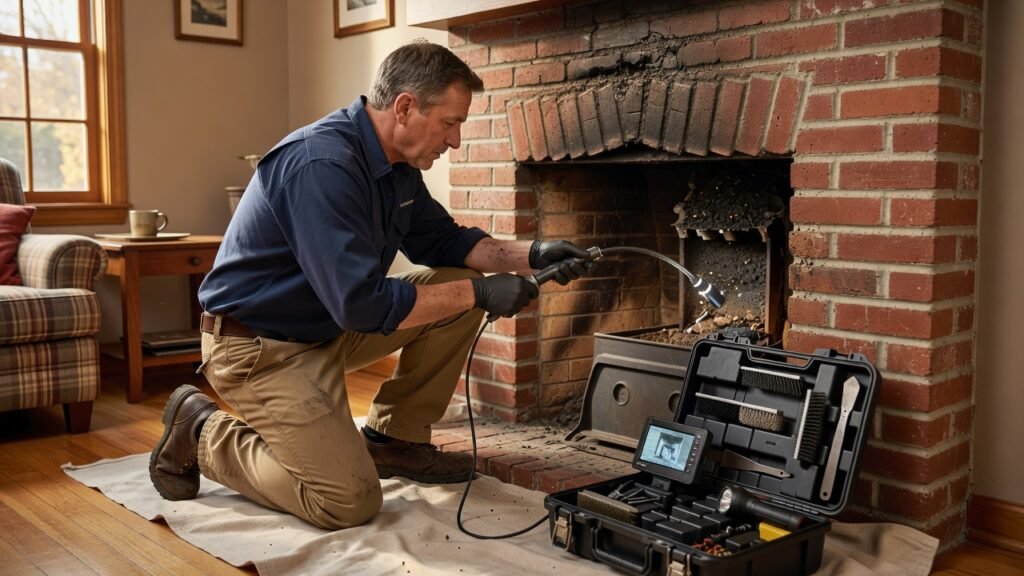
The technician should evaluate the accessible portions of the chimney system, including the firebox, damper, smoke chamber, visible flue, exterior masonry, crown, and other accessible components. The goal is to identify conditions that could affect safe operation, including obstructions, deterioration, excessive creosote, water intrusion, and visible damage.
If the inspection reveals a condition that cannot be adequately evaluated through a Level 1 inspection, a higher level of inspection may be appropriate. A Level 2 inspection can include video scanning of the flue to document the condition of the liner and other areas that cannot be fully evaluated visually.
A professional should explain what was found, provide documentation when appropriate, and distinguish between repairs that need immediate attention and issues that can be addressed later.
Frequently Asked Questions About Chimney Inspections in Maplewood, NJ
1. How often should I have my chimney inspected in Maplewood?
Chimneys in regular use should be inspected at least once a year to identify problems such as creosote buildup, liner damage, obstructions, and water intrusion. Annual inspections can catch smaller issues before they develop into major repairs or safety hazards.
2. How much does a chimney inspection cost in Maplewood, NJ?
A Level 1 chimney inspection in the Maplewood area typically costs between $150 and $250, depending on chimney height, access, and system complexity. If additional diagnostic work or repairs are needed, the cost will depend on the specific condition found.
3. What can a chimney inspection find that I cannot see?
A professional inspection can identify problems such as fractured clay flue tiles, deteriorated mortar, blocked passages, excessive creosote, and damage inside the smoke chamber. A Level 2 inspection with video scanning may be recommended when areas of the flue cannot be adequately evaluated during a Level 1 inspection.
4. When is a Level 2 chimney inspection necessary?
A Level 2 inspection may be appropriate when a Level 1 inspection cannot fully evaluate the chimney system or when there are concerns about hidden flue damage. Video scanning allows the technician to document the condition of the liner and other areas that are difficult to assess visually.
5. How long does a chimney inspection take?
A typical chimney inspection may take approximately 45 minutes to an hour, although the actual time depends on the condition and accessibility of the system. More complicated chimneys or inspections requiring additional diagnostic work may take longer.
Schedule Your Maplewood Chimney Inspection Before the Heating Season
The chimney professionals at Maplewood Chimney Services serve Maplewood, South Orange, Millburn, Livingston, Montclair, and surrounding Essex County communities.
A Level 1 annual inspection in this region typically costs between $150 and $250, depending on chimney height, access, and system complexity. If repairs or additional diagnostic work are needed, you should receive a written assessment before authorizing the work.
The inspection itself may take approximately 45 minutes to an hour, depending on the condition and accessibility of the system.
The purpose of an annual inspection is simple: identify problems before they become emergencies. A chimney fire, carbon monoxide event, damaged liner, or major masonry failure can be far more expensive and disruptive than routine inspection and maintenance.
If your last chimney inspection was more than a year ago, or you can’t remember when it happened, now is a good time to schedule one.
Contact Maplewood Chimney Services or request an estimate through maplewoodchimneyservicesllc.com to find out what your chimney actually needs before the heating season begins.
Robert Callahan, CSIA Certified Chimney Sweep
Lead Sweep Technician
15 years serving Maplewood and Essex County homeowners with chimney cleaning and repair.
Related from Maplewood Chimney Services: Chimney Sweep Services in Maplewood, NJ · Chimney Sweep in Maplewood · Chimney Sweep in Maplewood
Our services
Chimney Safety Codes · Structural Chimney Damage · Chimney restoration · Fireplace Installation · Flue Repair · Chimney Cap Installation
Areas we serve
Maplewood, NJ · Maplewood, NJ · Maplewood, NJ · Fireplace Repair Maplewood, NJ · Maplewood, NJ · Maplewood, NJ · All areas →